Use-Case Posts
Show a connector by the job it does. Each card pairs the user's request with UI from the apps involved, inside a fixed frame: toolkit backdrop, steps trace, and a powered-by footer. No headline on the image; the post copy carries the pitch.
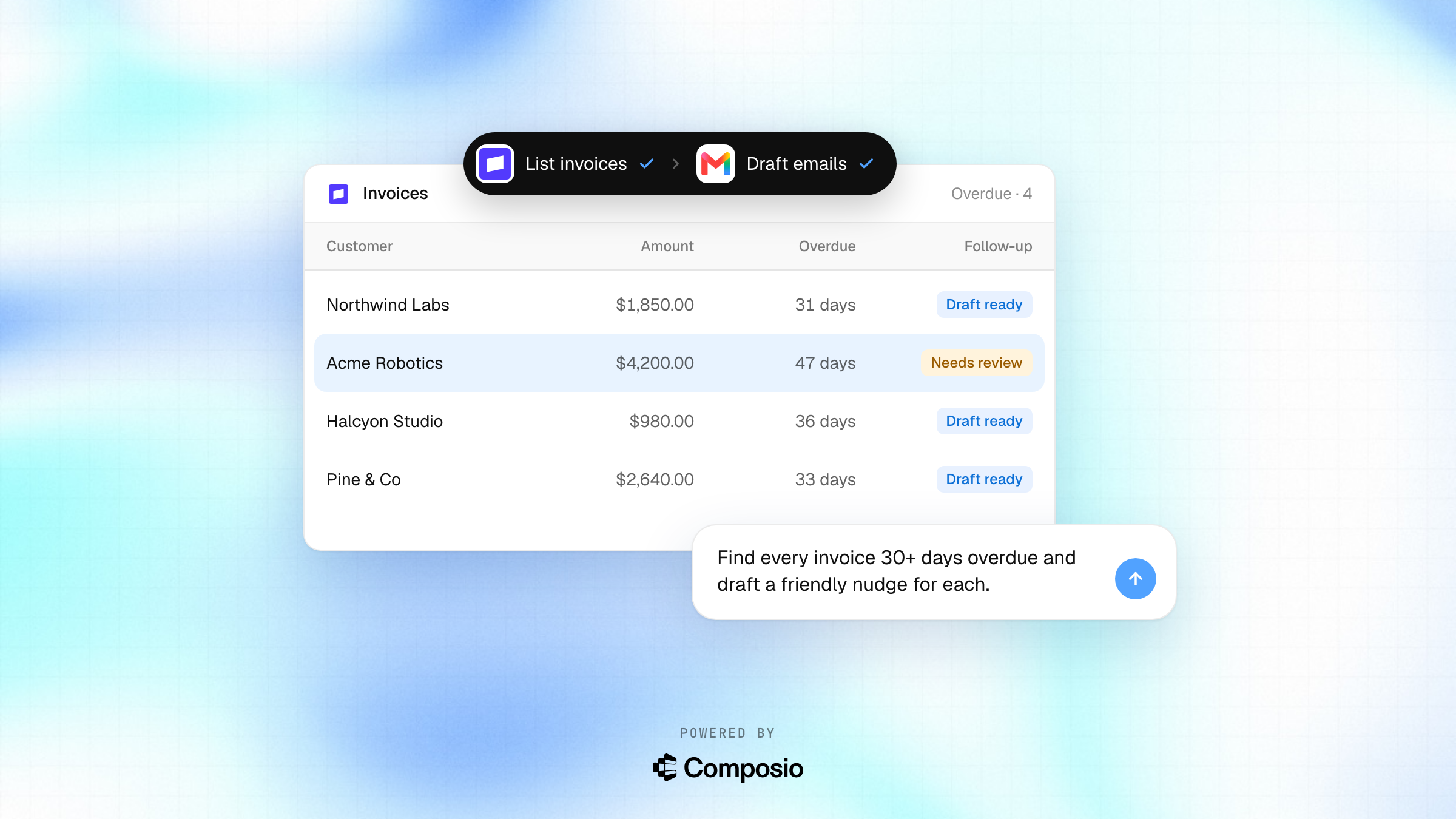
“Find every invoice 30+ days overdue and draft a friendly nudge for each.”
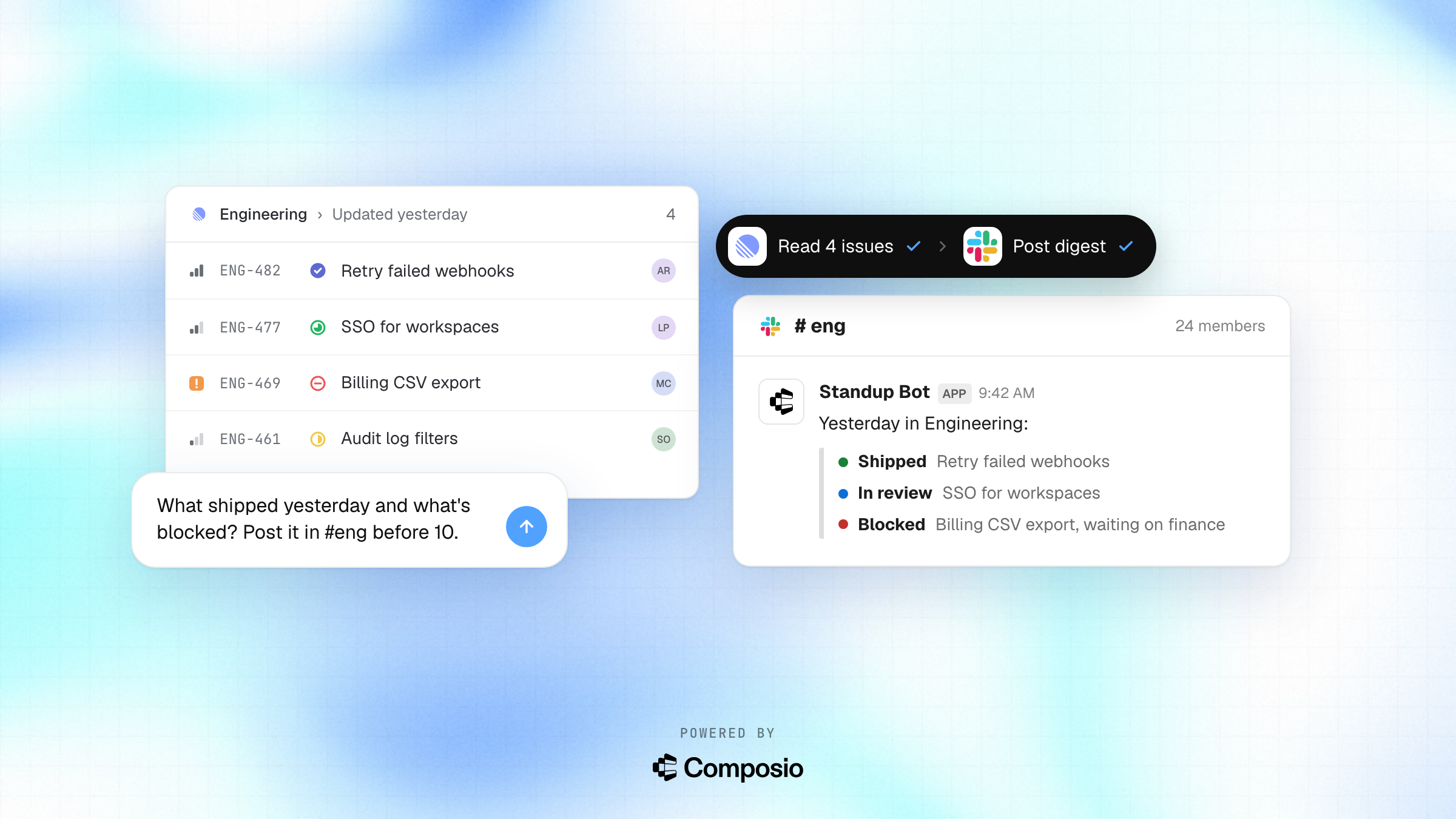
“What shipped yesterday and what's blocked? Post it in #eng before 10.”
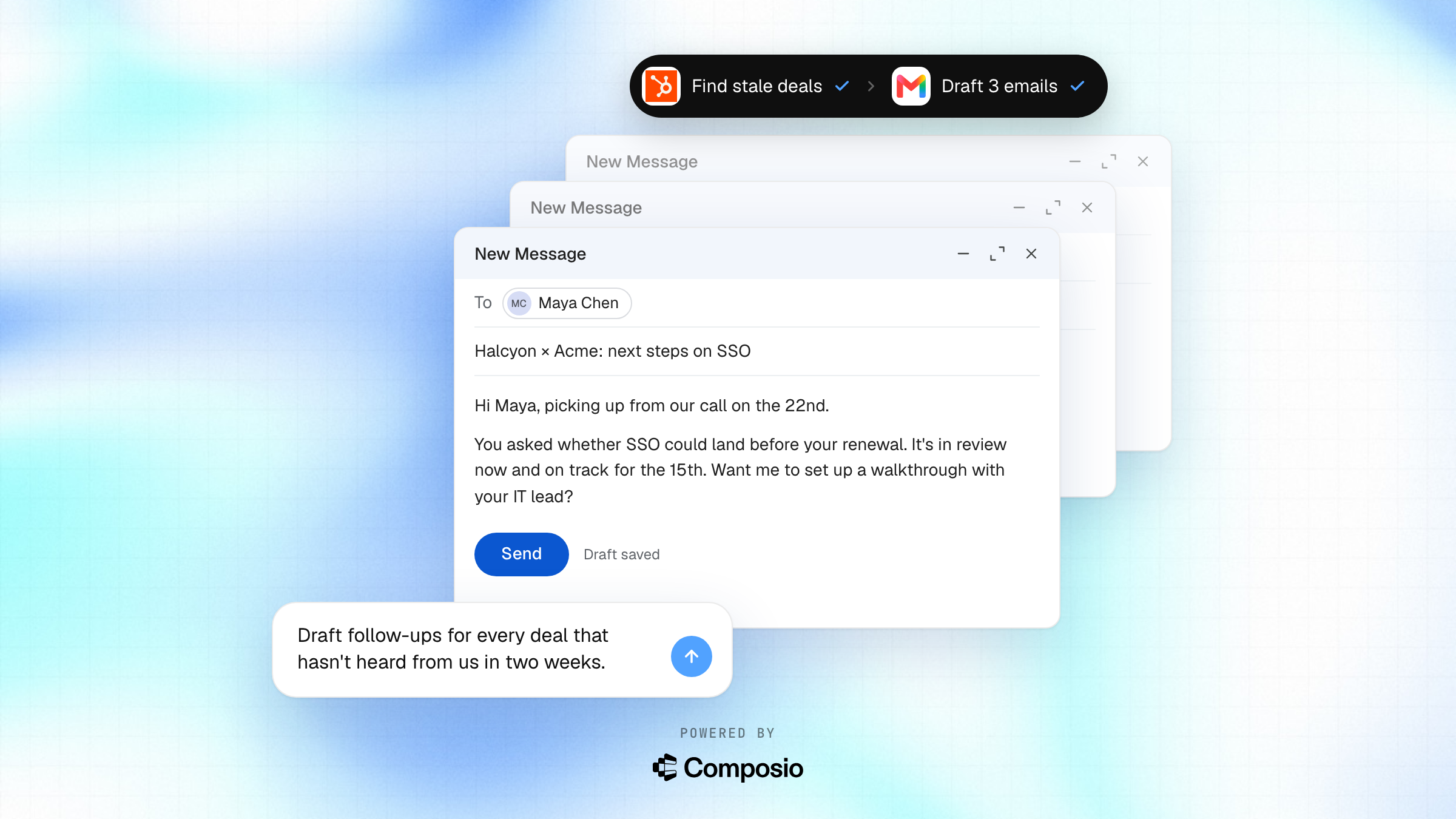
“Draft follow-ups for every deal that hasn't heard from us in two weeks.”
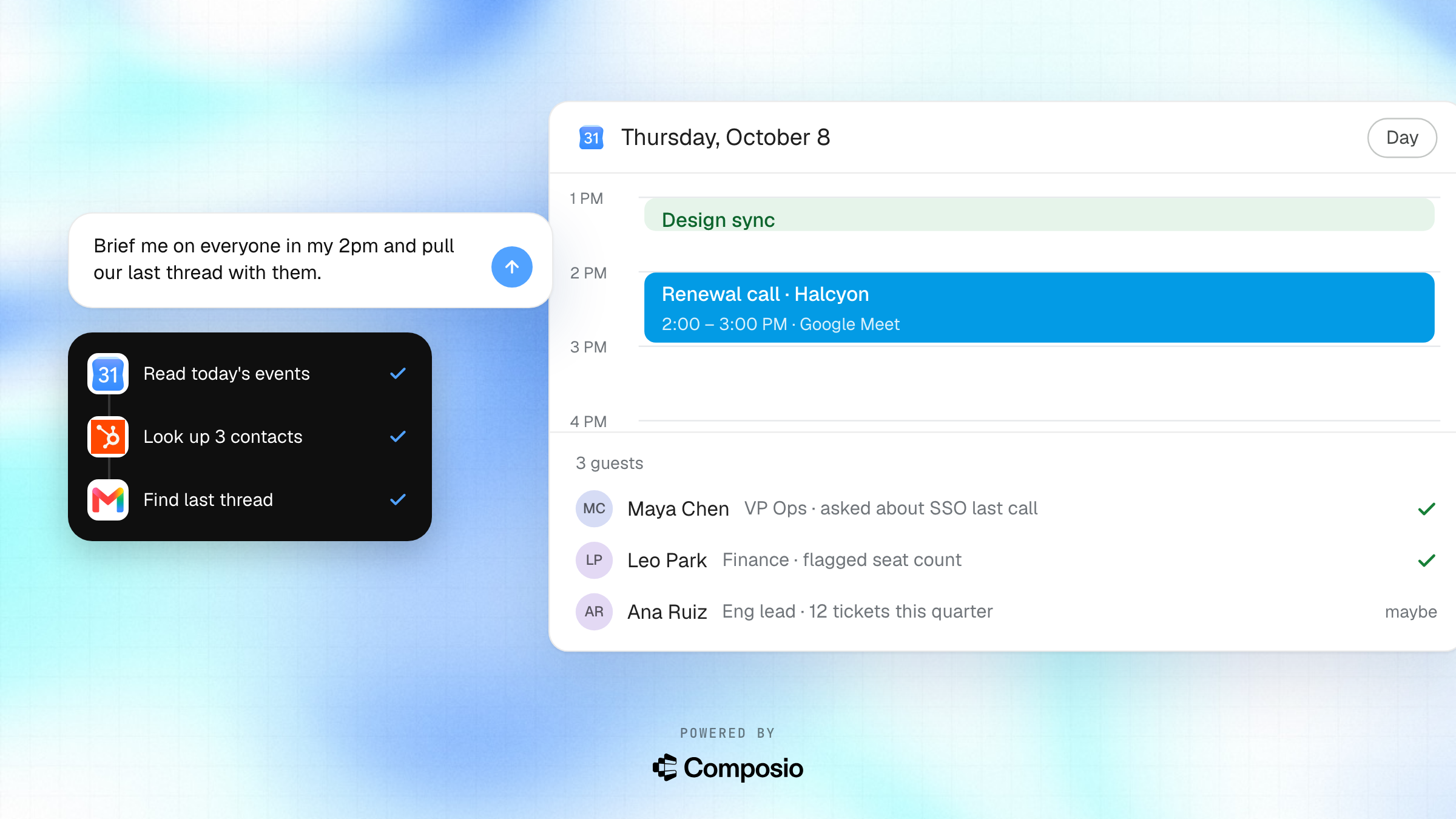
“Brief me on everyone in my 2pm and pull our last thread with them.”
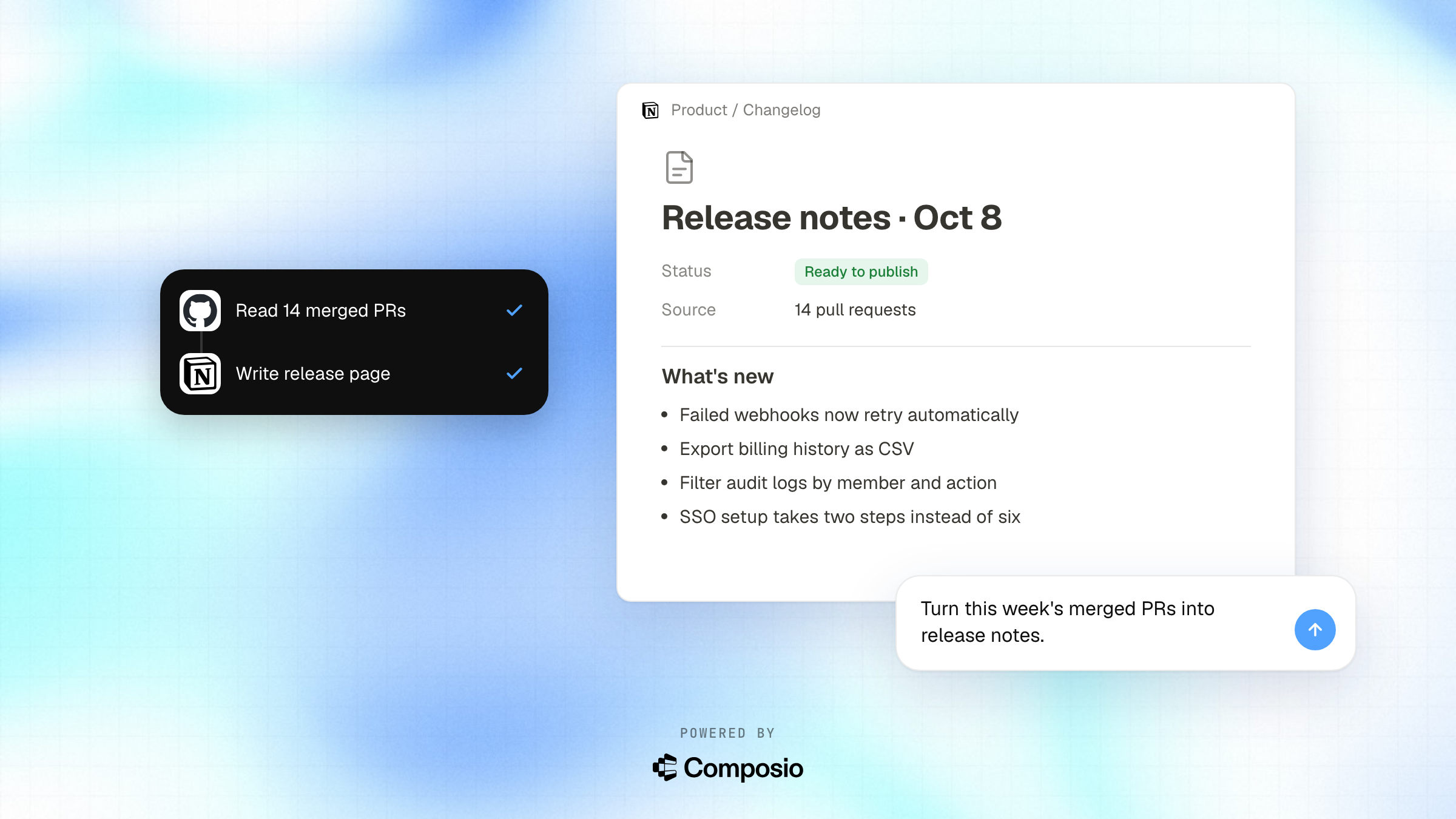
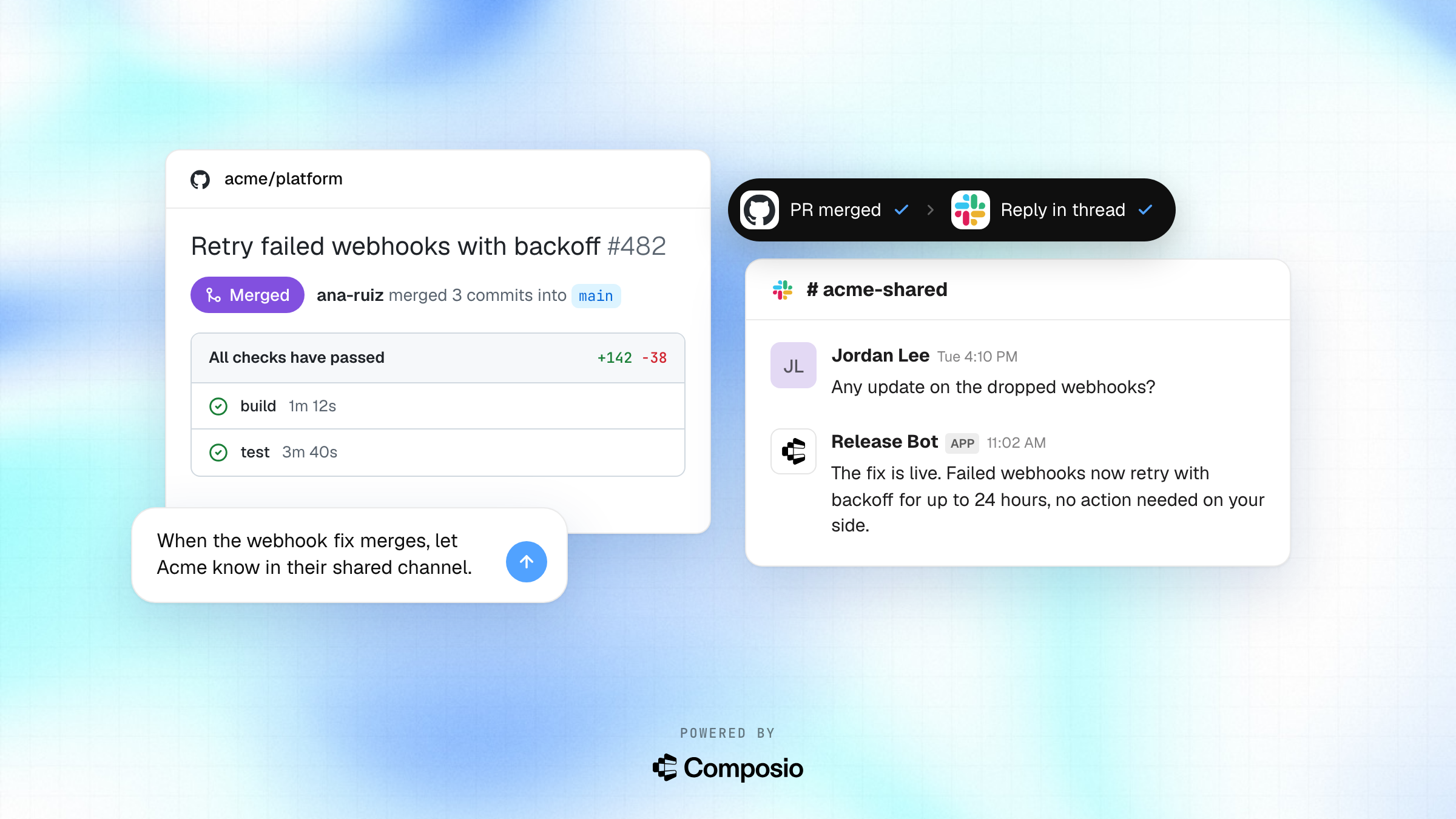
“When the webhook fix merges, let Acme know in their shared channel.”
Layouts
- stack
- One app, one result. Steps pill on the panel's top edge, prompt off its corner.
- flow
- Two apps: read from one, act in the other. Exactly two surfaces.
- fan
- One run, several outputs, like a batch of drafts. Up to three surfaces.
- focus
- One rich panel, enlarged and bleeding off the right edge. Prompt and steps on the left.
- split
- Steps column on the left, panel at natural size on the right.
Surfaces
- slack
- channel, members, messages[{ author, time, text, bot, items }]
- gmail
- to[], subject, body[], status
- linear
- team, view, issues[{ id, title, status, priority, assignee }]
- calendar
- date, startHour, hours, events[], guests[]
- github
- repo, title, number, state, author, base, checks[], additions, deletions
- notion
- breadcrumb, title, properties[], heading, todos[], bullets[]
- table
- app, title, meta, columns[], rows[][], highlight (CRMs, billing, sheets)
Make one
Copy an example JSON, change the prompt, steps (1–3, each an app slug and a label) and surfaces, then POST it to /api/chart for a 2400×1350 PNG, or render locally with node standalone/capture.mjs --json your-post.json. Logos resolve from the toolkit slug.
The frame, surfaces and layouts live in standalone/renderers/use-case.js; run node standalone/gen.mjs after editing it.